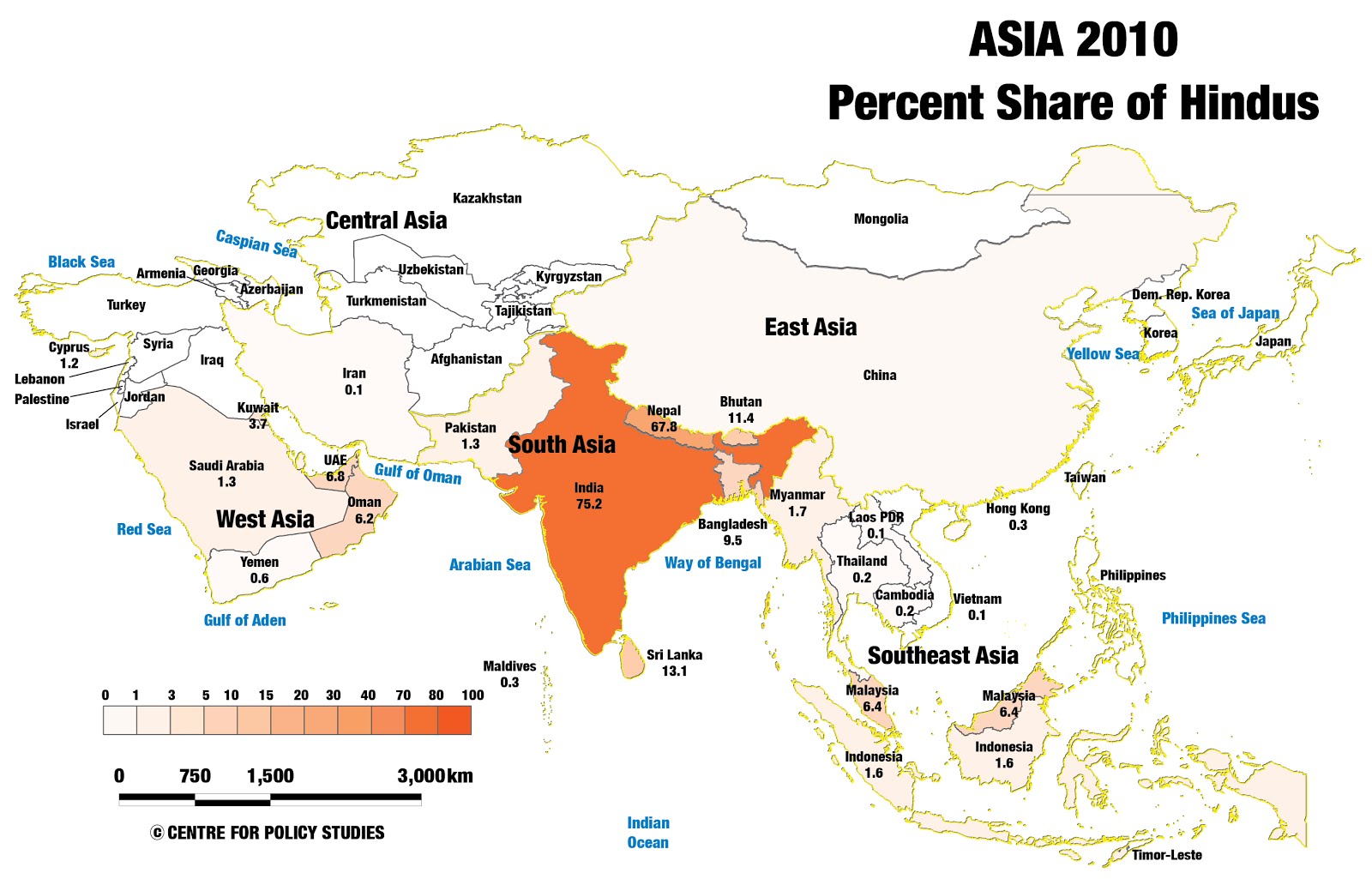
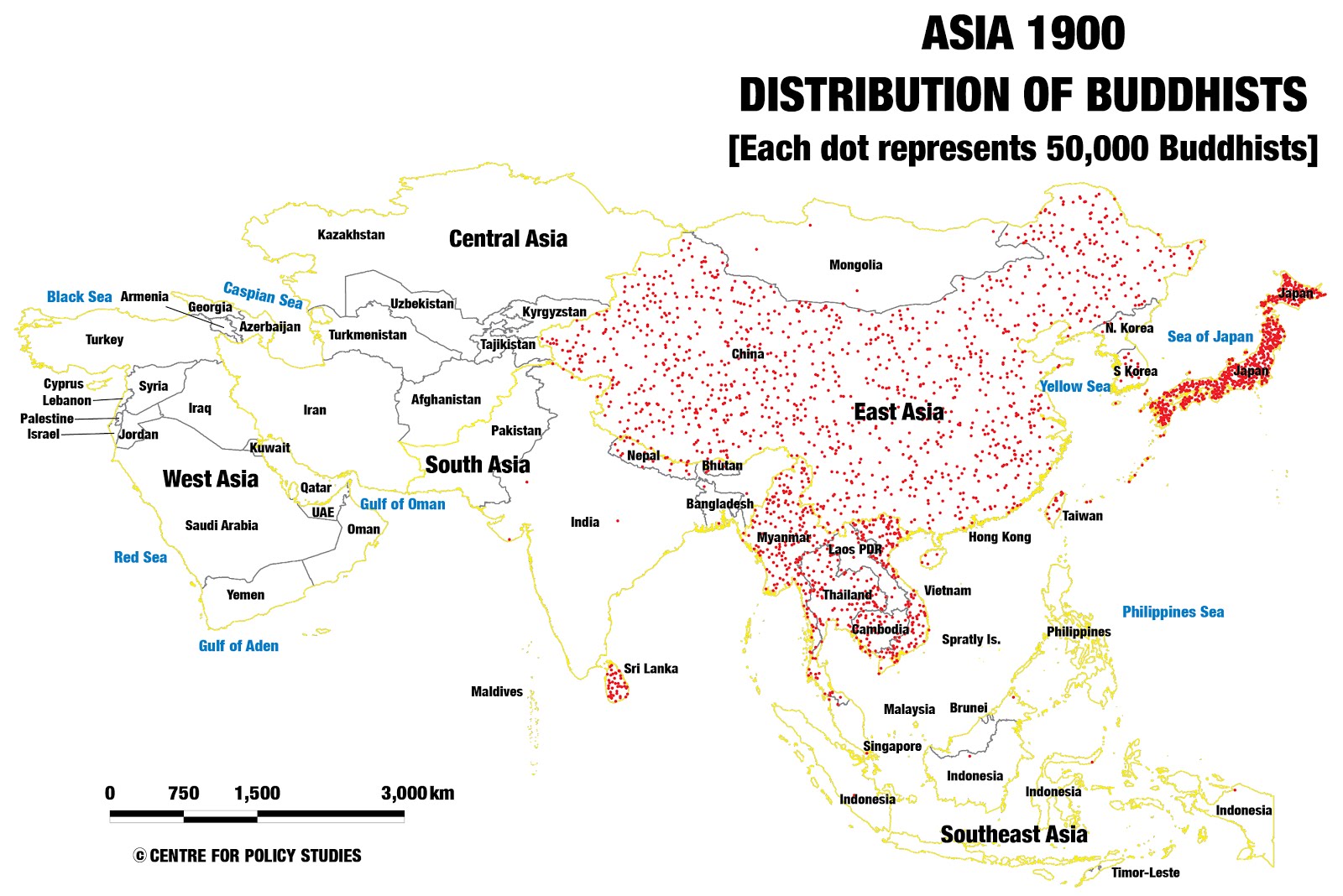
The changing religious profile of Asia:
Maps of Other Religions and the Irreligious
Ethnic Religionists


New Religionists


 Notice the decline in the share of the
Irreligious in China and the rise in North Korea. Decline in their share in
Kazakhstan, Uzbekistan, Kyrgyzstan, Tajikistan and Turkmenistan is also very
noticeable. Also notice a rise in the share of the Irreligious in most other
countries, including those of the Arabian Peninsula.
Notice the decline in the share of the
Irreligious in China and the rise in North Korea. Decline in their share in
Kazakhstan, Uzbekistan, Kyrgyzstan, Tajikistan and Turkmenistan is also very
noticeable. Also notice a rise in the share of the Irreligious in most other
countries, including those of the Arabian Peninsula.
Maps of Other Religions and the Irreligious
In this graphic appendix to the previous note, we give maps of the distribution of Ethnic Religions and
New Religions in different regions and countries of Asia in 1900 and 2010. We
also give maps of the distribution and share of the Irreligious in 1970 and
2010. Since, there were less than 6 million of the Irreligious in Asia in 1900
forming only about 0.01 percent of the population, we have not given maps of the
Irreligious for 1900.
It would be instructive to look at those maps while
reading through the description of the changes given in the previous note.
Ethnic Religionists


Notice the intense presence of Ethnic Religionists in the Koreas, Indonesia, Vietnam and Laos in 1900 and their continuing presence in the Koreas and Vietnam. Also notice, the increased presence of Ethnic Religionists in China and India, and even more so in Nepal and Myanmar.
New Religionists


Notice that in 1900, New Religions are confined almost entirely to Indonesia and Japan. In 2010, their presence has become even more intense in Japan and they have acquired considerable numbers in Vietnam, South Korea and also North Korea. Their influence in Indonesia seems to have waned in recent past.
The Irreligious
The Irreligious


Between 2000 and 2010, there has been
some decline in number of the Irreligious in China, but their number in 2010 is still larger than in 1700. The noticeable number of the Irreligious in
India in 2010 is not confirmed by the Census data. Maps of the share of the
Irreligious in different countries give a better appreciation of the changes.